Disability Pride Month 2026

Francis Coultas, Proud Disability Representative
There is a meme where a user, ‘@ElyKreimandahl’ says: “we don’t talk enough about how stressful Halloween costumes are for the ADHD community”. In response, @cicington responds: “Omg you people can’t do anything.”
I often think about this joke. Many people find it funny. I don't.
Leaving aside that often when this meme is referenced, it’s in response to a disabled person relaying their experiences and it speaks of a sentiment that’s been at the core of our society long before Twitter (currently X) existed - the sentiment that disabled people are defined by our incapabilities. How absurd to find dressing up stressful? Wait until I tell you about all the other day-to-day tasks that disabled people find difficult. As an autistic person, I’ve spent my life ashamed to admit the ‘easy’ things that confound me. It might not be a Halloween costume, but that’s not the point. The point is the shame; the point is being made the butt of a joke.
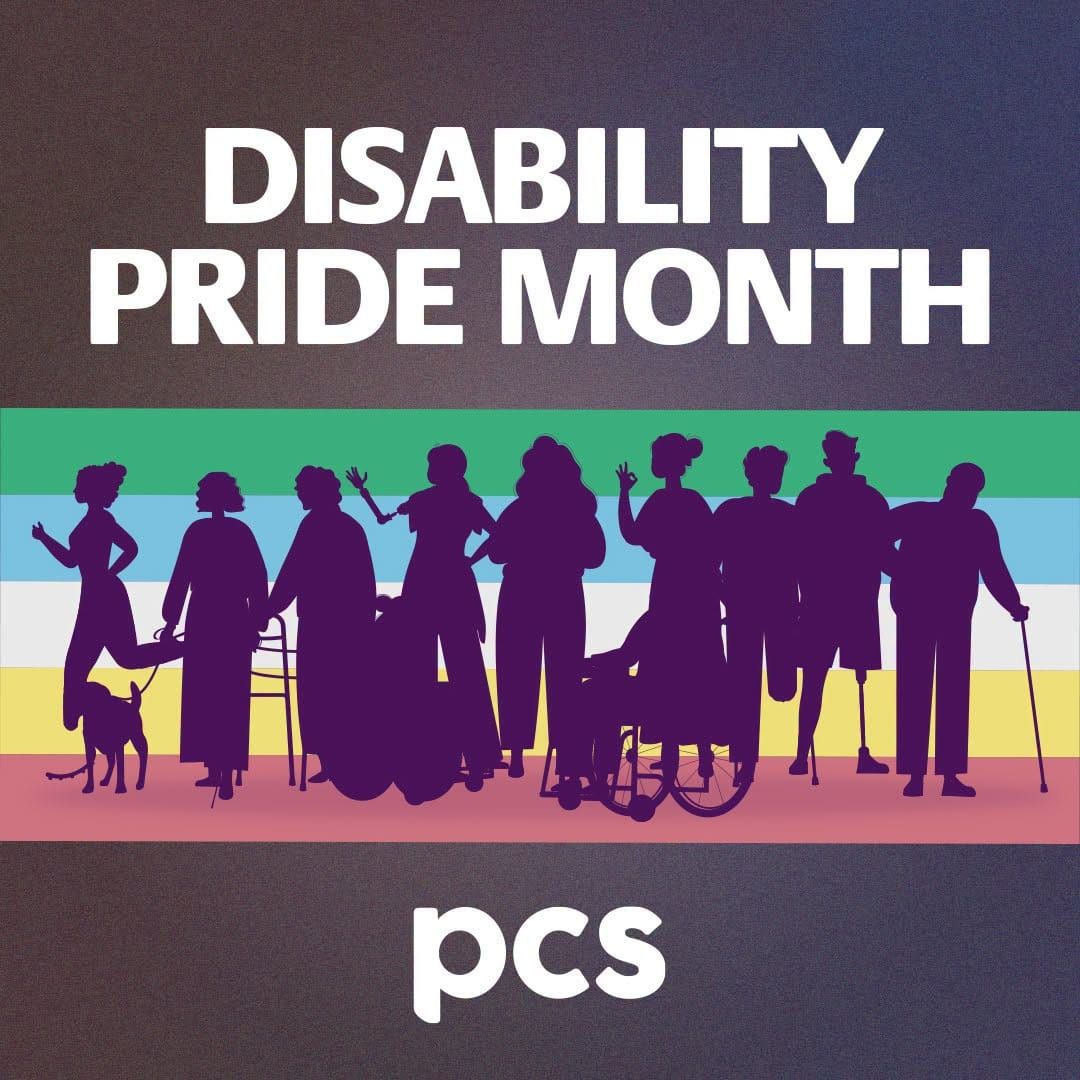
That’s why Disability Pride month is so important. Disability Pride Month is celebrated each July to recognise the history, achievements, and contributions of disabled people. It originated in the United States following the signing of the Americans with Disabilities Act (ADA) on 26 July 1990.
It is distinct from other disability events because it’s not just educational, it’s not just about visibility or simply getting a seat at the table (which we vitally need and deserve) – it’s about being proud to be a disabled person. I was recently talking to another person who, like me, is both a trans man and disabled, and laughing at the absurdity that both of us found it easier to come out as trans than disabled. Not to say that being trans is easy, but people expect you to be proud of being LGBTQ+. People don’t expect you to be proud of being disabled.
After all, why should we be? Us people can’t do anything.
When people picture a disabled person, they often imagine a stereotype: a wheelchair user, a Paralympian, or someone visibly disabled. My own first thought is my late uncle Bryan, who survived polio and used crutches throughout his life. He caught the disease when he was seven and used crutches due to paraplegia. One story my mum likes to tell is when he parked in a disabled space and she exclaimed, ‘Bryan, you can’t park here, it’s disabled!’
He looked at her and said, ‘but I am disabled.’
Aside from being a funny family anecdote it says something important about how we view disabled people. What kind of stereotype was in my mum’s mind, that she didn’t identify my uncle as a disabled man? Was it because she was brought up to believe that disabled people were people who can’t do stuff? And my uncle could do so much, he was a chemistry teacher, a photographer, he ran a nursing home and drove his family on a road trip across the USA.
Disabled people are often blamed for social and economic problems despite being among those most affected by them. Disability and poverty are closely linked: disabled people are more likely to experience poverty, and poverty can create or worsen disability. The barriers disabled people face are not personal failings but the result of political and economic choices.
Being proud to be disabled is revolutionary when society sees only what we can't do. "You people can't do anything" sits at the heart of ableism. Disability Pride rejects that idea. It recognises the inherent worth of disabled people and affirms that our value comes from our humanity, not our productivity. Taking pride in being disabled is an act of defiance.